Lock Installation in Fruit Cove
We install new locks on doors around Fruit Cove: a deadbolt above a knob that never had one, a keypad or smart lock in place of a plain deadbolt, a knob or lever on a bare door, or the full set on a brand-new door. Homeowners across Fruit Cove and the rest of 32259 book us for this, and renters can too with the owner’s OK. Call (904) 621-6891 or request a quote and tell us what’s on the door right now.
The line is answered and dispatched 24/7, so you can call whenever it suits you and set up the visit. Our techs are licensed, and the first thing they’ll ask about is what’s already cut into the door. We install locks customers bought themselves, and we install locks on doors a contractor hung and left bare.
Three jobs look like this one but aren’t. If the lock you have stopped working, that’s lock replacement for failed hardware. Locks fine, just want new keys? Then you want to rekey the locks you have. Moved in or lost the keys and want every door handled? Start with change every lock after closing.
What We Install on Fruit Cove Doors
Which install you need comes down to what’s already cut into the door, not to the lock you picked out. So that’s how this page is laid out: find your door in the table, then read the section for that job.
What Your Door Has Now Decides the Job
Install calls start with one of these four doors. Here’s what each one needs from us, and where to go if the hardware on it has failed instead.
| What’s on the door now | What the install needs | If it’s broken instead |
|---|---|---|
| Nothing yet: a blank slab or a new door | A full layout from the lock’s template, two bores through the face, the edge pockets, and two strikes in the frame | Nothing to fix yet; this is a clean install |
| A knob only | A deadbolt bore above the knob, plus a strike of its own in the frame | A knob that sticks or spins is a job to fix or replace a broken lock |
| A knob plus a deadbolt on a standard bore | A keypad or smart deadbolt drops into the deadbolt hole; a knob can go to a lever on the knob’s bore | A deadbolt that has died takes the same route as a broken knob, one row up |
| A builder-prepped door left bare | Hardware fitted to the holes already cut, with handing set for levers | Nothing to fix; the holes are the whole story |
Not sure which row is yours? Take a look at the edge of the door before you call, and we’ll place it on the phone.
Door Knob and Door Handle Installation
Knob, lever and handleset are the three shapes we put on a door. A knob and a lever do the same job through the same single round hole, and the lever is the one you can open with full hands. A handleset is the bigger front-door piece, a grip below a deadbolt on one plate.
Most builder doors already carry the standard single bore, so a knob or lever on one of those is the simplest install on this page. Swapping a working knob for a lever counts as an install too, and it goes on the same way. A knob that has come loose or won’t turn is a different job, and the table above points you to it.
Does it matter which way my door swings for a lever handle?
Yes for levers, no for knobs. A lever has to point away from the hinge side, so a door that swings left takes a different lever than one that swings right unless the model is reversible. Tell us which side the hinges are on when you book so the lever you get matches the door.
Some levers are sold reversible, and we flip them on site, either by turning the lever body over or by pulling a pin, depending on the model. Others are made for one hand and stay that way. To find your hinge side on a door that swings in, stand outside facing it: hinges on your left mean a left-hand door, hinges on your right mean a right-hand one.
Handlesets: Two Holes That Have to Line Up
A handleset puts a grip or a lever and a deadbolt on one long plate, so the distance between the two holes in the door has to match the plate before anything gets bored. On a door already prepped for a knob and a deadbolt, that spacing is the first thing we check. If the holes sit a different distance apart than the plate wants, the handleset won’t sit flat, and you hear that from us before the old hardware comes off.
On a door with a knob and no deadbolt, we bore the second hole to the plate’s own spacing, straight off the template in the box. The grip takes the lower hole and the deadbolt the upper one.
Adding a Deadbolt Above an Existing Knob
This is the classic add-on install: the knob stays put and a deadbolt goes in above it. The deadbolt gets its own hole through the door, its own pocket on the edge and its own strike in the frame. None of that is shared with the knob, so the knob keeps working the whole time.
What gets cut when a deadbolt goes in above a knob?
Four cuts: a round hole through the face of the door, a smaller hole in from the edge for the bolt, a shallow pocket on the edge so the bolt plate sits flush, and a matching pocket in the frame for the strike. We lay all four out from the lock’s own template, above the knob, and the job is done when the door closes and the bolt goes all the way into the frame.
The height isn’t guessed. The template sets the distance from the knob’s center, so the deadbolt lands where the maker meant it to and the pair reads as one set from the street. We tape the template on, mark all four cuts, and check the marks against the knob before the first hole goes in.
Keypad and Smart Locks on an Existing Deadbolt Hole
Three kinds of lock sit under this heading. A keypad lock opens on a code. A smart lock opens on a code and on an app, and many of them also keep a key cylinder for the day the batteries are flat. The usual job for all three is a drop-in on the deadbolt hole that’s already in the door.
Will a keypad or smart lock fit my current deadbolt hole?
Usually yes. Most keypad and smart deadbolts are built to drop into the same round hole a plain deadbolt uses, with parts in the box for both common backsets. We measure the hole, the backset and the door thickness before the old deadbolt comes off, so you know it fits before anything is drilled.
Then there’s the retrofit question. A retrofit model keeps your outside deadbolt and your key and only changes the inside half. A full-replacement model swaps both sides. We can tell which one you have from the box, and we say so before we start, because a retrofit leaves your key exactly as it was.
Which Smart Locks Need a Fresh Bore
Not every smart lock is a drop-in. A door with a knob only has no deadbolt hole at all, so the deadbolt bore goes in first and the smart lock goes into that. A few models take a bigger hole than the standard one, and the template in the box shows it. Smart levers and smart handlesets need the two-hole spacing on the door to match the plate, the same as a plain handleset does.
Each of those adds a cut before the mounting, and we plan for it once you tell us what’s on the door.
Codes, Batteries and the App Before We Leave
You supply three things: the Wi-Fi name and password if the lock uses it, a phone with the lock’s app already on it, and batteries if the box came without them. We mount the lock, set the bolt throw so it runs all the way in and out without dragging, pair it to the app, and test it from both sides of the door.
A couple of things are worth deciding before we come: a code for each person in the house, and a guest code you can hand out and delete later. If the lock keeps a key cylinder and you’d like it on the same key as the rest of the house, that’s rekey work, and we can rekey the other doors to match.
New Doors and Builder Blanks: Hardware From Scratch
A new slab from a door shop, or a door a contractor hung and left bare, is the cleanest install on this page. There’s nothing to match and nothing to work around. Contractor-hung and builder doors are regular work for us: the door goes in, the hardware gets left to somebody else, and that part is ours whether the door came bored or blank. We lay it out from the template and cut it the way the hardware wants.
Three Numbers We Take Off a Blank Door
Before any cutting, we take three measurements. Door thickness decides which latch and which bolt length go in. Backset, the distance from the edge of the door to the center of the face hole, decides where that hole sits. Bore size decides which hardware drops in at all.
The common sizes are what most hardware is made for: a door 1-3/8 to 1-3/4 inches thick, a backset of 2-3/8 or 2-3/4 inches, a face hole of 2-1/8 inches and an edge hole of 1 inch. We measure anyway, because older and custom doors don’t always follow them.
With the numbers set, the layout goes on the door: two bores through the face, two pockets on the edge, and two strikes in the frame. Then comes the swing test with the door shut, which is where hands-on experience shows, since the latch and the bolt both have to go all the way in without a shove. If the new lock isn’t behaving once we’ve gone, we come back and adjust it.
When a DIY Lock Install Makes Sense
Some of this you can do yourself, and we’ll say so. Doing it yourself is fair when:
- It’s one knob or lever going onto a door already bored for it.
- You have the maker’s template and instructions in hand.
- You’ve got time to test the swing and adjust the strike.
Two things account for most of the failed locks we see around Fruit Cove. One is low-grade hardware. The other is an install someone did themselves that never seated right, where the bolt throws part way or the latch fights the strike. A lock in that state is failed hardware rather than a fresh install, and the third column of the table near the top of this page is the route for it.
We’re insured, and that matters most on the cuts that can’t be undone. Booking us is worth it when:
- The door is a blank slab, since a layout mistake stays in the door.
- A lever has to be handed to the door.
- A handleset’s two holes have to match the plate.
- A smart lock has to be calibrated and paired.
- More than one door is getting hardware in a day.
Not sure which side of that line you’re on? Tell us the door and the lock you have in mind and we’ll say whether it fits. Call (904) 621-6891.
Two Outside Resources Before You Book Anyone
Two pages are worth a look before you book any locksmith, us included. ALOA, the locksmiths’ trade association, keeps a plain guide on how to hire a locksmith, and its member locksmith locator lets you look up who’s near you.
Five Things That Set an Install Quote
No two installs price the same, and the gap comes down to five things about the door and the hardware.
- Whether the door needs a fresh bore or is already prepped for the lock.
- Plain deadbolt, keypad, or Wi-Fi smart lock.
- A handleset, or a single knob or lever.
- How many doors get hardware in the one visit. Two installs on one trip is the top end for this page; a whole house of new locks is its own job.
- The hardware itself. We install locks customers bought themselves, so what is in your box is part of what sets the number.
Give us those five on the phone, or request an install quote through the form, and we’ll price your door from there.
Have These Ready on Install Day
A little prep on your end keeps the visit moving. Have these six things ready:
- The door type and thickness, or a photo of the door edge.
- The lock in its box if you bought it yourself: the paper template, the strike plate, the screws, and the batteries if they came with it.
- A photo of whatever is on the door now, or the old hardware itself if it’s already off.
- Which side the hinges are on, for a lever.
- The Wi-Fi name and password, and the phone with the app, for a smart lock.
- The inside of the door and the floor under it cleared, since boring makes chips. Our background-checked techs do this part inside the house, and a clear floor means a quick sweep at the end.
Where New Locks Go In Around Fruit Cove
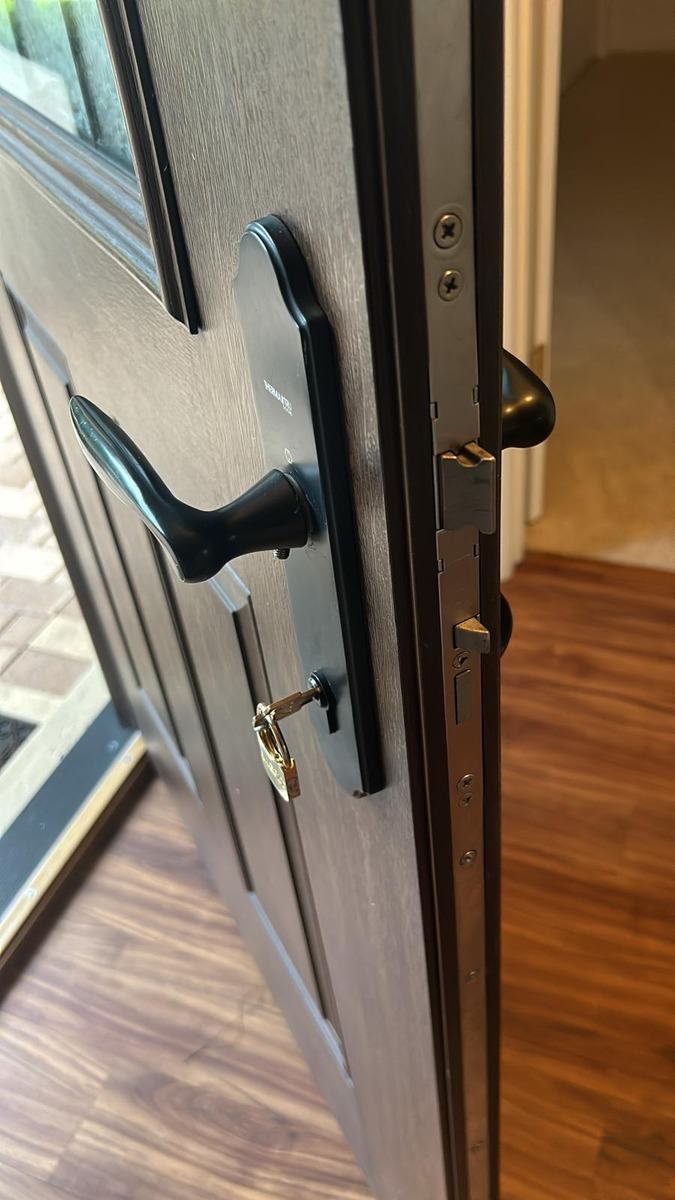
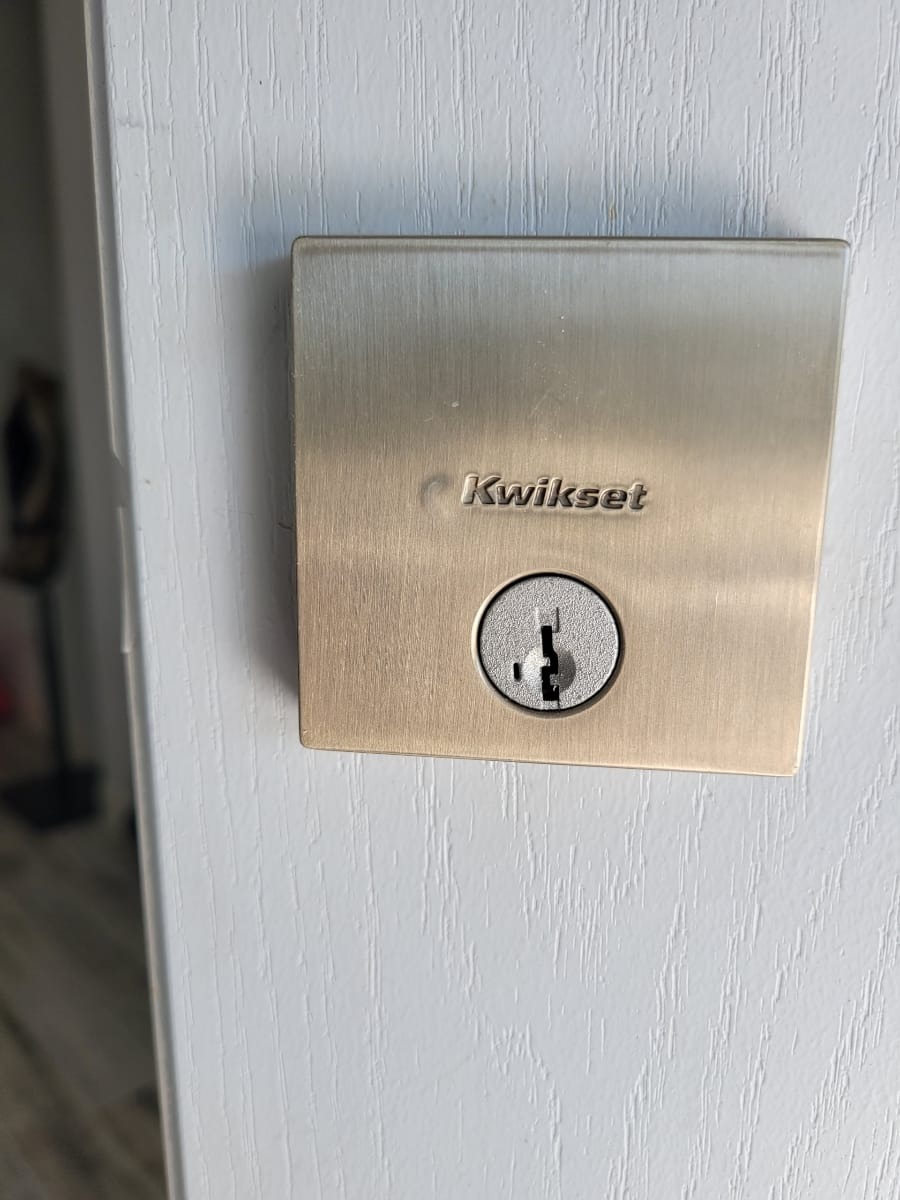
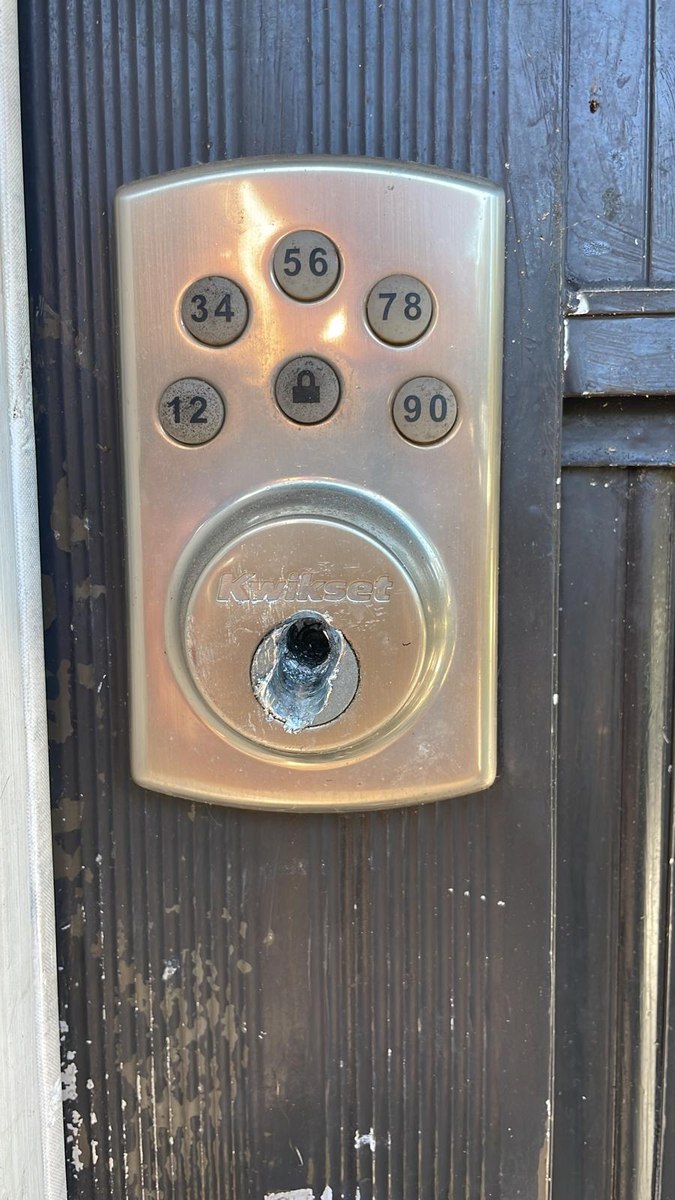
Most of the install calls we take come from Julington Creek. The doors behind them are the ones this page is built around: a front door that has only ever had a knob and is getting a deadbolt above it, or a door a contractor hung and left with no hardware in it. Some come with the lock already bought and still in its box, and that gets fitted the same way.
We also get called out to the homes around Cunningham Creek, to the subdivisions off Race Track Road, and to the lots along Fruit Cove Road. What decides the job at every one of them is the age of the door, more than the lock that was picked out.
When a remodel swaps the front door for a new slab and the old hardware doesn’t come across, the new door gets a full layout. A door hung by a contractor and left bare may be cut to a common prep or not cut at all, and we find out which before the tools come out. An older door can carry a thickness or a backset that’s off the common size, so the bore gets measured, never assumed.
All of Fruit Cove and the 32259 ZIP are covered from the same number, and the rest of what we do at the house is under residential lock services.
Answers on the Deadbolt, the Box and the Door
Do I need a deadbolt if my door already has a locking knob?
A locking knob holds the door with a short spring latch that the knob itself controls. A deadbolt adds a separate solid bolt that only moves with a key or the inside turn, which is why most exterior doors carry both. If your door only has the knob, we bore for a deadbolt above it in one visit.
Can a locksmith install a lock I bought online?
Yes. We install hardware you bought yourself, from a store or online. Keep the whole box, including the paper template, the strike plate and the screws, and tell us the door type and what is on it now when you call. We check the box against your door before anything is drilled, and if that lock won’t fit the door we say so before we start.
Does a new deadbolt need its own strike plate in the frame?
Yes. Every deadbolt gets its own strike cut into the jamb, separate from the knob’s, and we set it so the plate sits flush and the bolt reaches full depth. We test that with the door shut before we leave.