Lock Replacement and Repair in Fruit Cove
We repair the failed part or replace the lock on any door in a Fruit Cove home where the lock has stopped working: front and back doors, garage entry doors, sliding and patio doors, and mortise sets. One lock that sticks, spins, won’t catch, won’t throw, or has a key snapped off inside is the call this page is for. Call (904) 621-6891 and tell us which door it is, what the lock is doing, and whether a key is stuck in it.
The tech comes to the door anywhere in Fruit Cove and the 32259 streets around it. We’re licensed, and the line is answered and dispatched 24/7, so a door that won’t lock tonight is a call we take tonight, with a fast ETA to your door.
New locks, new keys and whole-house changes each have their own page, linked further down. Door won’t lock? Call now. Planning a swap? Send us the door and what it’s doing through the form.
Which Part of the Lock Failed: Cylinder, Latch, Strike, Bolt or Body
A door lock is four or five parts, and usually only one of them has failed. Name the part from what the lock is doing and the fix follows. Hinged doors first, then sliders.
Cylinder: Key Turns Hard, Spins Free or Snapped Off Inside
The cylinder is the part the key goes into. A key that turns hard means the pins inside are worn or gummed up. A key that spins without moving the latch means the tailpiece or follower behind it has let go.
A worn cylinder on a sound lock is simply changed for a new one, a door lock cylinder replacement that leaves the rest of the lock in place. When the housing is worn too, the whole lock is the better call.
A snapped key comes out first. If the cylinder was already turning hard before the key broke, we replace the lock cylinder; if it was working fine, it may be sound once the piece is out.
Latch and Spring: Knob or Lever Stuck in the Locked Position
The latch is the spring-loaded bolt that holds the door shut. A knob or lever stuck in the locked position, a latch stuck closed, or a loose handle that has started to miss points to a broken spring or a worn latch assembly.
If the knob set is sound, a new latch or spring goes in. If the set is worn through, we change the knob for a new one that fits the same holes. Stuck knob got you outside right now? That’s a lockout first, and we start with opening a stuck front door.
Strike Plate: Latch Not Catching When the Door Closes
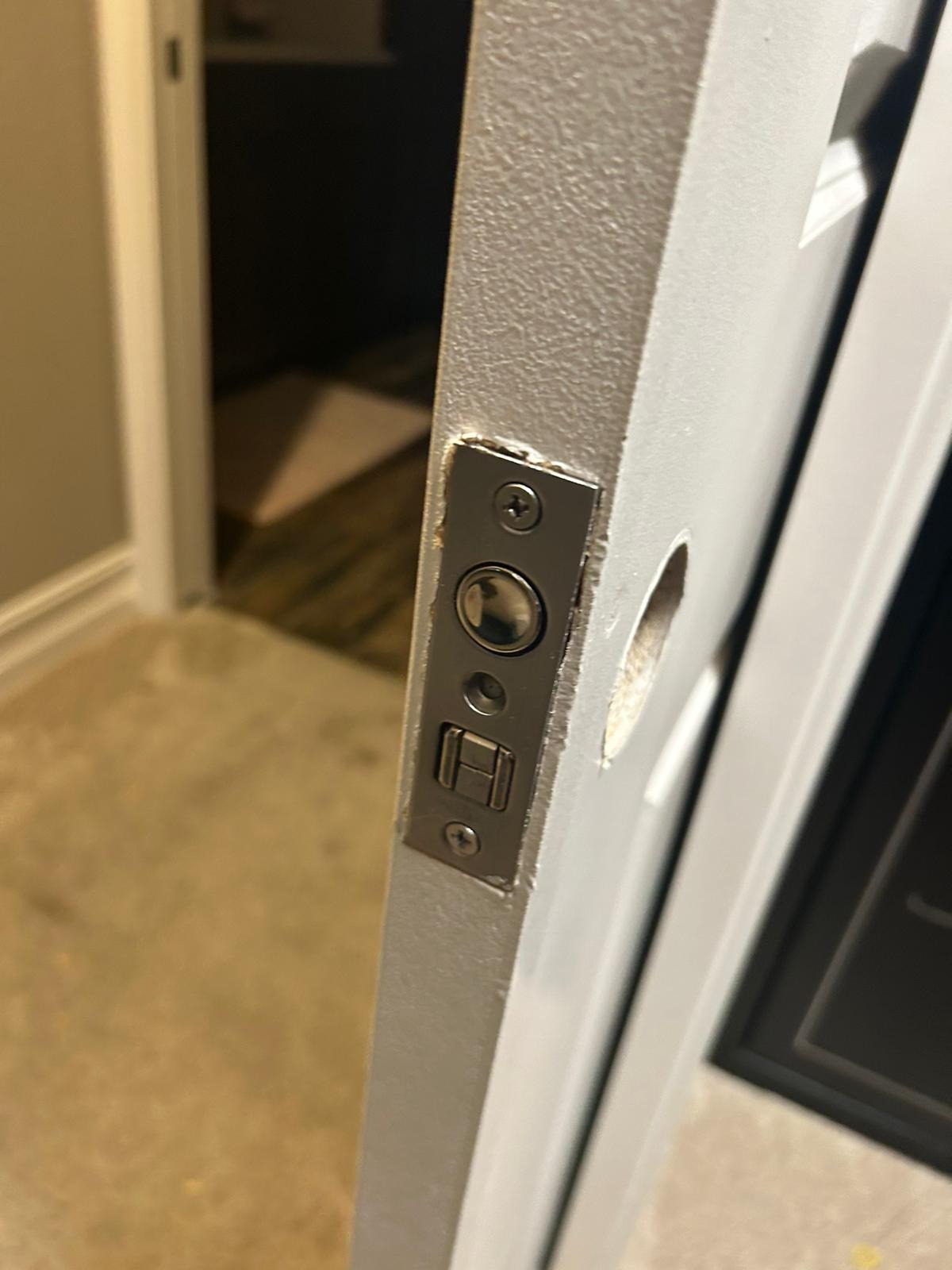
The strike is the plate on the jamb that the latch drops into. When the latch misses it, the door needs a lift or a shove to catch, or the screws have pulled out of the jamb. The plate gets re-set with longer screws and plugged holes, or a new plate goes on. The lock stays, and this tends to be the smallest job on this page.
Deadbolt: Bolt Will Not Throw or Sits Stuck in the Door
The symptoms here are a bolt that won’t throw all the way, a bolt stuck out in the door, or a thumb turn that spins free. If the bolt is sound, the cylinder or thumb turn alone gets replaced. If the bolt binds or the housing is worn, we replace the deadbolt lock as one unit, and the knob below it stays put.
Mortise Body: Loose Lever, Bolt Will Not Pull Back
A mortise lock is a rectangular body in a pocket cut into the door edge, with the cylinder threaded in from the face. A floppy lever or a bolt that won’t pull back points to the body. When the body is sound and only the cylinder failed, a cylinder swap is the mortise lock repair. When the mechanism inside is worn, mortise lock replacement means a new body in the same pocket.
Sliding and Patio Door Lock Repair and Replacement
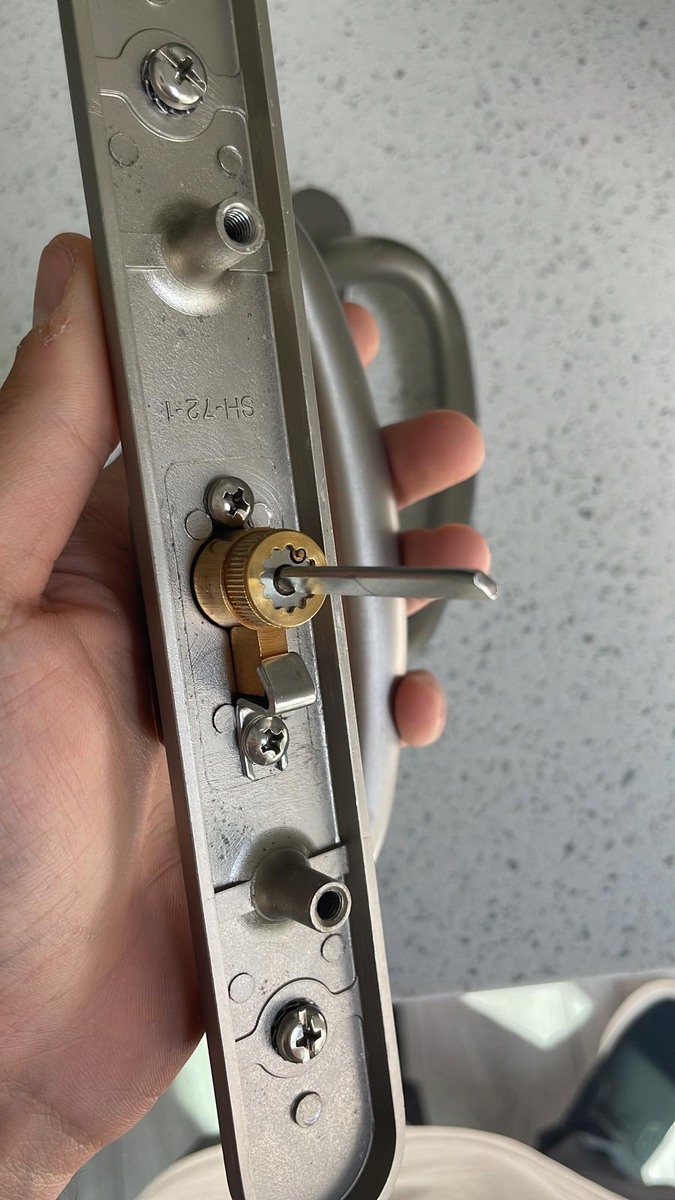
Sliders fail in their own way. The lock is a hook latch inside the handle that grabs a keeper on the frame, so sliding door lock repair and patio door lock replacement both start with which of the three let go: the latch, the handle set or the keeper.
Hook Latch Stuck Locked or Missing the Keeper
Three things bring in a hook latch call: the lever is stuck locked, the lever moves but the hook stays put, or the hook misses the keeper so the door shuts but won’t lock. When the door has dropped and the hook misses, we re-set the keeper. When the lever is frozen, or moves and the hook doesn’t, the mechanism has broken and a new hook latch goes in.
Replacing the Handle and Lock as One Set
On many sliders the latch is built into the handle, so a sliding glass door lock replacement means a new handle set. We measure the old set before pulling it, the screw spacing and where the latch sits on the stile, so the new one lines up with the holes already there.
A failed slider lock gets changed for a matching latch or handle set. Mortise-style latches set into the stile are handled the same way; that’s sliding door mortise lock replacement. Keyed or thumb-turn, we match what the door had.
Why does a sliding door lock stop catching?
Most sliding door locks are a hook inside the handle that grabs a keeper on the frame. When worn rollers let the door drop, or the keeper shifts, the hook misses; when the spring or lever inside the handle breaks, the hook stops moving at all. The first is an adjustment, the second is a new latch or handle set.
A second lock, a keyed lock on a thumb-turn slider, or a lock on a slider that never had one is sliding door lock installation, and that has its own page.
Which Failures Get a Part and Which Get a New Lock?
Repair when the failed part can be swapped and the rest of the lock is sound. Replace when the housing, the bolt or the mechanism itself is worn out, or when a matching part is no longer made. We check the lock at the door and tell you which it is.
Age is not the only thing that puts a lock on the replace side. Most of the failed locks we see around Fruit Cove were low-grade hardware to start with, and that kind runs through its springs and pins years before a sturdier lock would. The other one we see often is a lock that was rekeyed or fitted at home and quit partway through, where a pin or a spring sits out of place and no amount of turning brings it back.
| What failed | Part swap when | New lock when | Why |
|---|---|---|---|
| Worn or snapped-key cylinder | Housing and latch still work | Housing worn, or no matching cylinder made | The cylinder is its own part |
| Latch spring or latch assembly | Knob or lever set still sound | Set worn through | The latch slides out on its own |
| Strike plate or stripped jamb | Screws pulled or plate bent, latch still works | The latch has failed too | The strike sits on the jamb, not in the lock |
| Deadbolt bolt or housing | Only the cylinder or thumb turn failed | Bolt binds or housing worn | Bolt and housing are one unit |
| Sliding door hook latch or handle set | Hook misses, keeper can be re-set | Lever frozen, or moves without the hook | The mechanism lives inside the handle |
| Mortise body | Body sound, only the cylinder failed | Mechanism inside the body worn | The body is one unit in the pocket |
If the lock works fine and you only want different keys, that’s a job to rekey to a new key. More than one door, or just moved in with locks that work? That’s our full lock change service. A door that never had a deadbolt is an install, so start with adding a deadbolt.
Fixes Worth Trying Before You Call
- A sticky cylinder takes dry lubricant, graphite or PTFE. Oil collects grit, so keep it out of the keyway.
- A loose knob or lever often just needs the through-bolts snugged up.
- If the latch misses the strike, back the screws out and re-set the plate with longer screws.
- On a slider, clear the track and check the rollers before you blame the lock.
A snapped key, a cylinder that spins, and a mortise body are not do-it-yourself jobs.
One Tech, One Door: How the Swap Runs in Fruit Cove
One tech, one visit, at your door in Fruit Cove. Here’s the order it runs in.
Replacement Stock That Rides Along
Tell us the door and the symptom on the phone so the tech knows what to bring, and we say on the call whether the part comes off the van or gets ordered for your door.
Measuring the Door Before the Old Lock Comes Off
Before the old lock comes off, the tech measures the backset, the bore, the door thickness, the faceplate shape, and for a lever the handing, which is the side the hinges sit on. Those numbers pick the replacement, so the new lock uses the prep already in the door.
Fitting, Testing and Handing Over the Keys
The part or the lock goes in. Then the tech throws the bolt with the door open and again with it closed, checks that the latch meets the strike, and hands over the keys that came with the lock. Our techs bring hands-on experience with every lock on this page. The tech at your door is background-checked. If the new lock or the new part gives trouble later, we come back and set it right.
Call (904) 621-6891 now if the door won’t lock tonight. For a planned swap, send us the door and what it’s doing through the form and we’ll quote it.
Matching the New Lock to the Door You Have
A replacement has to fit the holes, the edge and the look of the door it goes on.
What is backset, and why does it matter for a replacement lock?
Backset is the distance from the edge of the door to the center of the lock hole, and on most house doors it is either 2-3/8 or 2-3/4 inches. A replacement latch has to match it, or the new lock sits off-center and binds. We measure it before choosing the part so the new lock uses the holes already in the door. Many replacement latches adjust between the two backsets, and we set them before fitting.
Finish, Bore Size and Faceplate Shape
Most house doors are bored at 2-1/8 inches for the knob, lever or deadbolt, so a standard replacement drops into the same hole. The faceplate is the plate on the door edge around the latch, and it comes square-cornered or rounded; we match the shape the door has so nothing needs chiseling. The finish gets matched to the other hardware on the door.
Lock Grades When Only One Lock Is Being Replaced
ANSI/BHMA grades are a standard scale for how much use and force a lock stands up to. Grade 1 is the toughest and is built for commercial doors. Grade 2 is the stronger residential choice, and Grade 3 is basic residential hardware.
When only one lock is being replaced, you can match the grade of the part that failed or step up on that one door without touching the others. A higher-grade deadbolt fits the same bore and backset.
Part Swap or Whole Lock: Where the Cost Lands
Whether the fix is a part or a whole lock is the biggest thing. After that, the cost moves on a short list:
- The lock type. A mortise body or a slider handle set tends to be a bigger job than a knob, a lever or a deadbolt.
- The grade of the replacement, if you step up from what failed.
- Whether the matching part and finish are on the van or have to be ordered.
- Pulling a snapped key out before the swap can start.
Call with the door and the symptom, or send it through the form, and you’ll hear what your door needs. For the rest of what we do at the house, see home lock services in Fruit Cove.
Failed-Lock Calls by Fruit Cove Door Type
Every failed-lock call in Fruit Cove, ZIP 32259, and the streets right around it comes through the same number, and the tech heads out with a fast ETA. Calls come in and vans go out 24/7. We’re insured, and the work happens at the door.
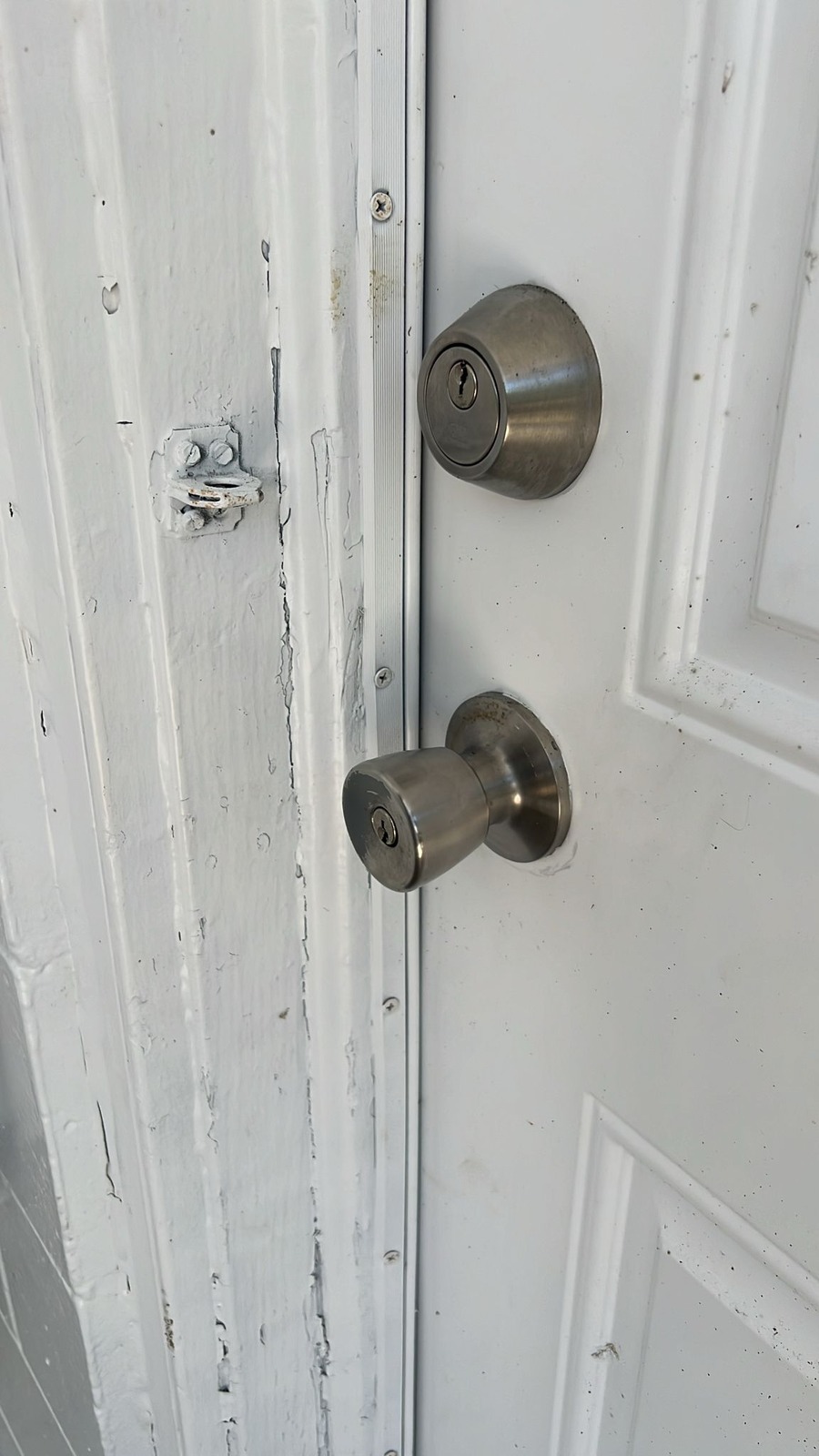
We sort these calls by the door they come from. Front doors bring in deadbolts that won’t throw and knob sets stuck in the locked position. Garage entry doors bring in strikes that have let go and latches that don’t catch. Patio sliders bring in hook latches, and mortise sets bring in loose levers and bolts that won’t pull back.
Why they failed usually comes down to two things. Builder-grade and bargain hardware wears out early, so the knob or deadbolt that came off the low end of the shelf is the one that gives out first on a Fruit Cove door. The second is a lock that was taken apart for a rekey or fitted new at home and stopped working during the job, which leaves a sound door with a lock that has to be replaced.
Failed locks reach us from Julington Creek more than from anywhere else we cover, and the houses there are where both of those causes show up. What waits at the door is usually a low-grade cylinder or latch that ran out early, or a set that came apart during a job at the house and would not go back together.
Patio Sliders and Older Mortise Sets on the River Side
The older one-off houses along Fruit Cove Road and Cunningham Creek, the river side of Fruit Cove, tend to carry patio sliders and older mortise sets. When one of those has already been swapped once for low-grade hardware, that replacement is usually what failed, not the door it went into. On a mortise door there, the pocket in the edge usually outlasts the mechanism inside it, so a new body or cylinder goes into the door that’s already hung. On a slider, the handle set is matched to the stile so the door keeps its glass and its track.
A lock that stopped working? Call (904) 621-6891, 24/7. For a planned swap, send the door and the symptom through the contact form and we’ll quote it.
Questions About Failed Locks and Broken Parts
My sliding door lock is stuck. Do I need a new lock, or can it be fixed?
It depends on where it is stuck. If the lever will not move at all, the hook latch inside the handle has usually broken and gets replaced with a new latch or handle set. If the lever moves but the hook will not let go of the keeper, the keeper has shifted and re-setting it frees it. Tell us what the lever does when you call and we will say which one it is.
Can you replace a deadbolt without replacing the handle set too?
Yes. A deadbolt is its own lock and comes off on its own, and the replacement goes into the same hole with the same backset, so the knob or handle below it stays. We match the finish as closely as the stock allows. The one exception is a one-piece handleset, where the deadbolt is the top half of the same unit and the set is replaced together.
Can a worn mortise lock be replaced without changing the door?
Often, yes. The body sits in a pocket cut into the door edge, and a new body that matches the pocket goes in, so the door stays as it is. If the body is sound and only the cylinder has failed, the old cylinder threads out and a new one threads in. Send a photo of the door edge and the face through the contact form and we will tell you which one it needs.